WEBINAR
Small Budget, Big Impact
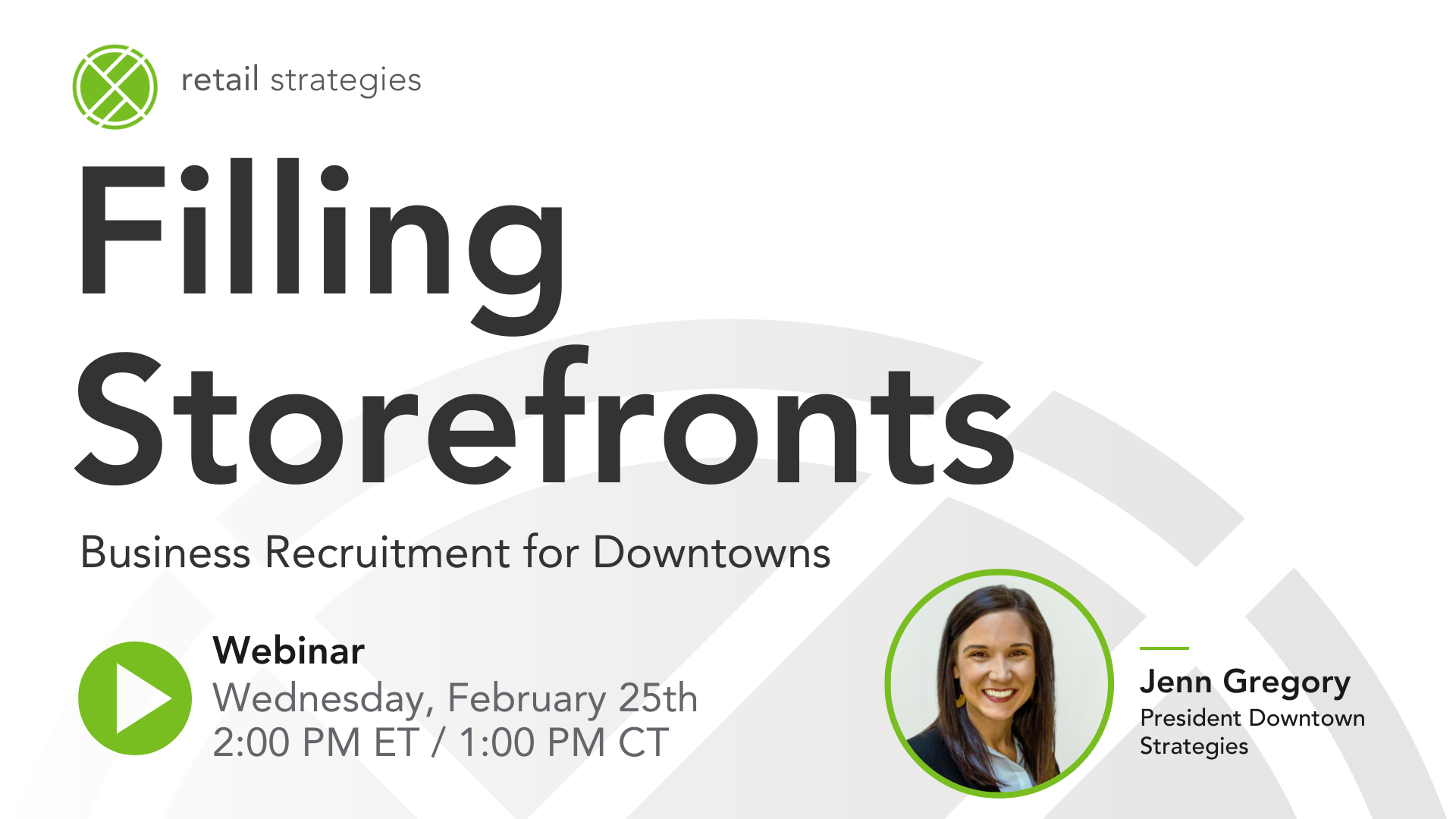
How Rural Downtowns Are Winning with an Incremental Approach
June 17 @ 1PM EST
Downtown revitalization doesn’t require millions of dollars or massive master plans. For communities with limited capital and resources, taking incremental steps often proves more sustainable and effective than attempting large-scale transformations.
In this one-hour session, discover how mayors and city managers in small to mid-size communities are transforming their downtowns one strategic step at a time. You’ll learn about the incremental revitalization approach that’s helping rural communities create vibrant downtown spaces, attract businesses, and build community pride—all within realistic budget constraints.
Join Jenn Gregory, President of Downtown Strategies at Retail Strategies, as she shares real success stories from communities that started with small investments and achieved remarkable results. From storefront improvements and pocket parks to creative incentives and micro-events, discover how to identify quick wins that build momentum for larger initiatives.
Watch the Webinar
Okay. Well, good afternoon, everyone. It is one o’clock, so we are going to go ahead and get started. Lots of people coming into the webinar. So if you haven’t already, please feel free to introduce yourself in the chat and let us know what your top challenge is that you’re struggling with in your downtown. We have a lot of folks registered for from for this webinar from all over the country, so it’s really exciting to see kind of who you guys are, where you’re from. And, also, it’s more fun when we use the chat, when this is engaging and conversational. So I’m gonna do my best to share information about our topic, manage and and watch the chat in case you guys have any questions in real time. But, also, many of you presubmitted questions that were on your mind when you registered for this webinar. And so I am planning to dedicate about half of the time of this webinar, so about thirty minutes, to answering those presubmitted questions because there were a lot, but also a lot of the same kinds of questions. So I feel like, many of you are probably struggling with some of the same things. So let’s see if we can address some of those questions, but, also, I want to share with you, information about this topic, which is small budget, big impact, how rural downtowns are winning with an incremental approach. So my name is Jen Gregory. First, there are a lot of familiar faces, that are on this webinar already, clients of ours, friends and influencers that we know throughout the community development industry, but a lot of faces that are potentially new as well. So welcome. Thank you so much for spending this hour with me. So, again, my name is Jen Gregory. I’m the president of Downtown Strategies at our company, Retail Strategies. I’ll give you a little bit of an overview of our company and specifically about our division of downtown strategies here at the company. But my background is probably the same as many of yours. I’m a former community and economic development practitioner, and I spent about fifteen years. I started a Main Street program. I grew it. I was the CEO of an economic development organization, and I’ve had my own consulting firm along with I’ve also been a client of Retail Strategies. So I’ve really been in a lot of your shoes before, but so honored to to be leading this division here at Retail Strategies. So here’s kind of a rundown of what I hope to share with you today. First, briefly, a little bit about our company for those of you that aren’t familiar. Second, I want to level set a little bit about vacancy rates and downtown readiness. This is really important before we dig into kind of some specific strategies for improving your downtowns. Third, the whole topic, the reason that a lot of you probably came here, I wanna share with you seven proven, high impact, low cost strategies that I think that you can implement in your downtown, with not a lot of resources. And then as I mentioned, I wanna dedicate a good bit of time to presubmitted questions, but also any questions that you have while you are here on this this webinar. So, again, let’s keep the chat going and engaging. If you have questions or comments or things that you wanna share with fellow participants, please feel free to do that as we go along. So just a little bit about our company, Retail Strategies. If you’re not familiar, we are the nation’s leading municipal consulting firm focused on strategically developing communities. So that comes in a lot of different ways. We have multiple divisions here at Retail Strategies, and and that is in response to questions that we have received from our clients over the years. So we started out as just a retail recruitment firm where we recruit national retail to your commercial corridors, and that is what this retail recruitment division is all about. Then we formed Retail Academy, which is a division that is dedicated to training city leaders and economic development professionals all about how to recruit retail yourselves. Maybe you don’t have the budget to hire us for full service retail recruitment. We train you up on how to do that yourselves. Then in twenty nineteen came downtown strategies. We worked with over two hundred cities in twenty seven states now on really this very topic that we’re talking about today, short term, actionable, practical strategies that will really move the needle in your community. And then, obviously, we have other divisions as well, small business support, which is where we train small businesses in your communities on how to elevate and modernize, and Retail Advisor. We have a really robust team at our company, seventy plus individuals that are all focused on supporting communities, but we operate as a very boutique, municipal consulting firm, which is wonderful. We want to build relationships with our partners. And, again, thanks to all of our existing and former clients and partners that are on the call today. I see many of you. I wanna tell you a little bit about our Downtown Strategies team too. This is our team that I’m so fortunate and blessed to work with every single day, and we we like to say that we have been in your shoes. And I think that’s important before we start talking about this topic today because, you know, there are a lot of ideas out there on the on the web, at conferences about things that you could do in your downtown, but are they really doable? And so we are able to filter through that question because we have done this work ourselves. The this is a list of kind of all the hats that we have worn over the years before we formed this downtown strategies team, and it is really our distinct honor and pleasure to get to work with communities just like yours on creating actionable strategies and then, most importantly, implementing them. So let’s jump in. First, I really wanna level set about kind of some statistics and what we know about vacancies and about kind of downtown readiness. And I would say that seventy five percent of this the questions that you guys submitted in advance were all about vacant properties. So if you submitted a question like that, first, you’re not alone. And I can confidently say that every single community that I have ever worked with, both in my own consulting firm and here at Downtown Strategies, every single downtown has struggled with vacant properties. So, first, the majority of the downtown challenges that we see and hear when we travel all across this country working with communities just like yours are that we have deteriorating buildings. Maybe they were historic. Maybe once they were gorgeous and beautiful, but now they are going to take a lot of money and time to renovate. What do we do about those? Second, aging infrastructure, whether that is streetscapes that need improvements downtown, or maybe you wanna upgrade lighting, and and these really high cost infrastructure items are needing to be modernized. Third, technology gaps, and this really goes along with your businesses. Our our small mom and pop locally owned businesses are really the heart of our downtowns. They are what portray the character of your community, but often those businesses don’t have the capital maybe or the confidence to invest in technology that will really help them serve their customers better. And finally, low foot traffic. Now, a lot of the downtowns that are represented on this webinar today are thriving, wonderful downtowns. Some of you guys have downtowns that you’re starting at square one. That’s okay. All of these challenges, I think, will and solutions will really apply to the majority of your downtown. So low foot traffic, that can be that you have a dead downtown or that it’s just not where you want it to be. So I’m curious to know if these are challenges that you guys are experiencing. And if so, kind of let us know to what degree in the chat so that I can make sure that what I’m talking about really is relevant to you guys. So we mentioned these these challenges, and a lot of you in the chat are saying, yes. All of the above. So that’s good. What do we do about it? Well, let’s also talk about vacancy because this is a really big challenge, and I will go ahead and tell you that if any consultant or anybody tells you that they have a solution to fix all of your vacancies, they’re probably not being honest. This is a challenge. Challenge. There are a lot of ways that we can address this and kind of chip away at it, but the challenge is that these vacant buildings are owned by the private sector. And most of you on this webinar represent the public sector. So there are some ways that you can implement policy to influence these vacancies, and, of course, you can work with the property owner to attract new retail. But at Downtown Strategies, we like to talk about doing the doable. Like, let’s not completely stress about what is outside of our control, but what can we do, and will doing the doable really affect some of these challenges? And Cliff’s notes, yes. They will. So first, let’s look at rural downtown vacancy trends. Now rural by the government is defined as a community with fifty thousand or less. We have worked with communities of five hundred people. We have worked in communities with over three hundred thousand people. So I would say that a lot of these trends, go across the spectrum and really are affecting everybody. But here’s what the data says about rural downtown vacancies, and that is they are going up. As time goes by, you can see going back to over a decade ago to twenty thirteen. Fast forward to just a few short years ago in twenty twenty three, vacancies are increasing incrementally over time. And the reason there’s a lot of reasons for that. But primarily, it is because those deteriorating buildings, the cost of renovating them now is, you know, way too much than the revenue that that property owner can make to make that business plan whole, if you will. So there is a gap in the pro form a. And if the market just settles itself, oftentimes, it’s not going to. You know? Those buildings, those projects are just not feasible. So, again, are there ways that you guys can influence this? Yes. And we will be talking about those. But let’s just point out that this is a real thing, and it’s happening really everywhere. Also, I think we can see that as you look at population, the more rural the community, the higher the vacancy rate. And that makes sense. Right? You know, foot traffic and having shoppers, kind of captive audience is really what contributes to thriving business. So when you have fewer people in the community, oftentimes, those people are driving out to, metro areas or more urban areas to work. There aren’t as many people around to shop. So how can we have a thriving downtown in a super rural community? Sometimes we have to manufacture that foot traffic, and we’re gonna talk about that. Also, it’s important to note that while we are primarily talking about ground floor vacancies today and and a a lot of the strategies that I’ll be highlighting are ways to really get more pedestrian traffic and and drive more traffic downtown. So we’re not gonna focus too much on the upper floor vacancies today, but this is something that is a real challenge in many of your downtowns as well. You can see that, you know, not quite double, but but a a significantly more number of vacancies are happening on the upper floors because it’s expensive. A city coding and, you know, zoning and expectations have increased for public safety purposes. So now to activate that upper floor, we’re having to put sprinklers in. We’re having to put elevators in, and then that really wrecks the pro form a. So how do we fix it? Well, I’m gonna talk about some implementable strategies today that you can start implementing today, tomorrow, you know, as quick as you want. But I also want to give this disclaimer. I say this a lot, and in fact, I was on a call with some some friends, some clients this morning, and and I talked about this just earlier today, and that is that a lot of communities want to jump to phase four. Alright. So let’s go through all of these phases. But if we look at phase four, this is business growth, new shops open, and increased vitality. So so many city leaders that I speak with say, how do I recruit retail and restaurants to my downtown? That’s what I want. I need more businesses, and that is great. That’s what we all want. But we cannot just jump straight to that because, like we talked about, the economics of getting investment downtown is such that it’s already challenging because of historic and deteriorating buildings, but also coupled with the fact that there may not be the foot traffic needed for these businesses to really thrive, we have to follow this process in order to get this phase four result. And so that process very quickly is, number one, investing in the public realm. And a lot of you on the call today are mayors, city managers, downtown development directors, economic developers, and this is your, you know, this is your realm. We need to focus on downtown readiness first. Think about it just like an, you know, industrial recruitment because a lot of you that are economic developers probably deal with that every day. Before you can get a a billion dollar or more, you know, auto manufacturer or whatever to come and bring their big industry to your community, you have to have product. You have to have a site. You have to have utilities. You have to have all of these things in place, these foundational things in order for this recruitment effort to work. Same thing with national retail recruitment. If you want that Target or that Chick fil A, you have to have a perfect piece of real estate for it to go in, and you have to have the demographics and the traffic counts to support that. The same can be said for downtown. Before you get that amazing brewery or that awesome retailer or restaurant that you’re dreaming of, you have to focus on product development first. So phase one, investing in the public realm. That is things like, events, you know, driving traffic downtown, showing a population of consumers, public art, adding color and life to the downtown, infrastructure, and that doesn’t necessarily mean million dollar infrastructure projects. In fact, I’m gonna point out a couple of low cost, big impact infrastructure projects today and and activity. We have to show that this is a place that is worth investing in. Once we do that, in phase two, we start to see that increased activity. We get more visitors, higher foot traffic. There is a buzz. We can feel it. Something’s happening downtown. That leads to phase three, which is investor confidence. This is when we start seeing people purchase buildings, renovate them, improve their properties, and really make the types of redevelopment projects that we wanna see happen in our downtown. And then finally is what we all want, which is that phase four business growth, new shops opening, increased vitality. Our downtown has got it going on. So please, please, please don’t just skip to phase four. Think about phase one. That’s what we’re talking about today. That is the downtown readiness piece that is so important. And I will say that many downtowns and and and communities and many of you that submitted questions early said asked the question, where do I start? Like, I kinda know what I need to be doing. What is step one? And we feel like having a strategic plan is the best way to pull all of those pieces of not everything you could possibly do, but what should you do? What are the things that are important for your community in a data driven approach to get your downtown ready for investment? So that’s my next question before we jump into the seven strategies that I’m gonna share with you, and that is, do you have a strategic plan? Would love to know from you guys, do you have a strategic plan, an action plan? I’m not really talking about a master plan or a comprehensive plan because those are very high level. Do you have a a, you know, a short term action plan that really shows you what are the projects you need to be working on? You know, do you need murals? Do you need ambient lighting? Kind of that very granular project oriented approach. So let us know about that, and I’m gonna get into the topic here, which is seven proven high impact, low cost strategies for your downtown. This is being recorded. We will share this slide deck with you, so don’t feel like you have to take copious notes. We also will be available if you have questions, obviously, during the webinar but after as well. So let’s start with our first strategy that I wanna share with you, and that is storefront improvement mini grants. Mini grants. Five hundred dollars to twenty five hundred dollar matching grants. Now why are we talking about store fund improvement? Well, obviously, vacancy is a huge problem, but we are gonna focus on doing the doable. So in the cases where you have a business already located in your downtown, and maybe that storefront just needs a glow up, the facade grant is a great thing to consider, but that is working with the property owner often. You know, those are sometimes bigger projects. Storefront improvement grants can sometimes be called vibrancy grants. These are things that focus on paint, signage, lighting, landscaping, and by landscaping, we mean potted plants, having benches outside, really activating this the the streetscape from the private sector perspective. So what are the benefits of this? First, immediate visual transformation. We are not gonna be waiting on an investor to come by our million dollar buildings. We’re gonna give a five hundred dollar grant that’s gonna be matching. We’re gonna see a thousand dollars of improvement, maybe two new potted plants outside. That is going to add something to the streetscape. Second of all, it leverages private investment. So it brings those business owners to the table that are usually hungry to participate. They want more people downtown. They want to be part of the solution, so supporting them is really helpful. And then one of my favorites, it creates peer pressure for neighboring properties. I get asked a lot, how do we get these people that won’t buy into our ideas? How do we get these property owners to really come to the table? And I love to say, shame them. Right? Make sure that everything around them is growing and improving, and then they building looks terrible. So it creates peer pressure, and it’s a quick way to get some visible improvements downtown. So what are we talking about? Look at these storefronts. You know, they have nice painted or raised letter signage. They have painted facades. You know, some of them have potted plants out. Obviously, this is kind of a a streetery, and we’re gonna talk more about that later. So these are things that really make a difference. A coat of paint, gosh, makes a big difference. So small scale storefront improvement grants focused on the business owner, not necessarily the property owner. A lot of times, have to have the property owner’s permission if you’re gonna paint, but really think about signage, potted plants, sandwich boards, things like that. Okay. Next, we’re gonna talk about pocket parks and public space enhancement. So here are some low cost options. Parklets. I’m a show you some pictures of what I mean by this. But parklets are kind of like streeteries, or they can be little pop up parks for for act you know, activities using donated materials. And, again, I’ll show you a picture of what I mean in just a second. Mural walls with local artists, outdoor seating areas, community gardens, performance spaces. The impacts that these make are that they increase foot traffic, and most importantly, they provide Instagram worthy spaces. And what do we mean by that? Somebody’s in your downtown and it’s cool and there’s something visually appealing, they’re gonna take a picture and post it to Instagram or Snap or whatever they use. And most of the time, they’re gonna tag their location. Downtown Wilson, Downtown Rockdale, you know, whatever it is. That’s gonna share to their entire following that they are in this cool area, and here is a picture. That’s free advertising, and it starts to generate that buzz. And then finally, this signals community investment. Right? Like, you care about your downtown. You’re doing something. So how do we get something like this off the ground? Partner with local service clubs like Rotary, Kiwanis. My experience is that those clubs, master gardeners, are looking for visible projects that they can help with, but also that they can point to and say that that’s what we did. Use volunteer labor and seek material donations, and and volunteer labor doesn’t have to be your same old same committee members. Think about using schoolchildren, Eagle Scouts, you know, other types of groups that are looking for community service hours, and apply for small state and regional grants. There are so many opportunities through USDA, through your states, that through your main street organization for small grants. And and don’t overlook those because these really stack up. Murals make such a big difference, and they can be eclectic and funky. They can be traditional and historic. They can have your city name on it. They can have just a very, you know, nonspecific art message. This is a a a picture of look at all these people that are just hanging out. And all this is is part of the street that has been painted. Planters have been added, so we’re not talking about digging up the side or the streets and planting trees. We’re talking about raised planters with with plants, a painted street, and little metal folding chairs, some shade sales to provide shade. This is a cool area that is Instagram worthy. It is inviting people, and retail follows people. So downtown, what that means is is if I’m thinking about open opening up a business, and I I’m going to be looking for a consumer base, and many times that is people pushing strollers, riding bikes, walking, jogging, eating outside. Again, manufacturing that perception of vitality even if you don’t have the business stock yet. Nobody is shopping right here. Right? They’re outside hanging out. This is an example of a community garden. I absolutely love this. This is donated materials in kind of the back of a building that was probably highly underutilized space, numbered raised beds so that people can rent those, they can partner on those, and have a place to garden. We we see these all over Europe, and we’re starting to see them trickle throughout the United States, especially in areas where we have good climates. Super fun way to get people downtown. And this is a parklet. You can see this is a burned out building. This is in Arkansas. This is an area where there used to be a building. It’s no longer there, so they put turf down, put art and murals and cool things on the walls, ambient lighting, probably donated tables or worked with partners to get those, and we have a projector and a movie. So take a minute and let us know in the chat, are you guys doing any of these projects? Are they having a good effect? Are they driving traffic downtown? These don’t have to be expensive. They do take some, you know, sweat equity and some organization, but they are doable. And, yes, Jennifer, we will share these slides after the meeting. Absolutely. Strategy three, creative business incentives. This is really where I geek out because I love policy as a foundation for downtown revitalization. I don’t have beautiful pictures to show of this because this is not very the sexy part of downtown revitalization, but it lays the foundation. And these are the things that really make your downtown attractive to investors and developers. There are a thousand different incentives that you can consider. The ones that you implement need to be strategic. They need to address a challenge that you have or a goal that you have. So maybe one of you submitted a question about high taxes, property taxes. Can that be a deterrent to redevelopment? I’m gonna answer that in more detail later, but tax abatement. If you are hearing over and over again that your taxes are unusually high, maybe, and maybe you are not an elected official and that is not something that you can deal with, and quite frankly, most cities are not gonna reduce taxes. You know? They are what they are. They’re gonna go up, but most of the time, they don’t go down. Tax abatement is a great approach to this. So, again, choose your incentives creatively to be sure and strategically that they are addressing something that you have. Now you see that I have a a picture of a carrot here. We really like the carrot and stick approach. So I’m gonna go through a very few of these. I did a full webinar on this last fall. Some of you may have attended that about kind of the carrot and the stick. But some key incentive types that we see can be ones that require money, like facade improvements, the storefront improvement grants that we talked about earlier, low interest loans. But they can also be more in kind, tax abatement. That is not gonna require money out of the city’s pocket. Building acquisition, that’s not really an incentive, but it is a very strategic way to be sure that if there is a key building in your downtown that you don’t want to get messed up, acquire that building, hold on to it, and use it as an asset and an incentive to attract the type of development that you want to see. Again, when we consult with our partners, we go deep into this because it is a real passion of mine, and it’s one that makes a big difference. But it can incentives can also be things like training, technical assistance, facilitating opportunities for businesses to test the market. These are all ways to really support your entrepreneurial class while also investing in them a little bit. The goal of these policies is to enhance the downtown’s appeal. It is simply that that readiness that I talked about earlier. It’s also to fill that gap. I mentioned that most of the challenges that we are seeing with vacancies is that there’s a pro form a problem. This can really help incrementally to to fill that gap. How do we fund these? Well, many, many cities are using just money in their general budget, but EDCs are great partners for this. Community development block grants can be used for this selectively in the right markets. But then, also, I would encourage you to think about the stick side. We talked about the carrot and the stick. A lot of you have already mentioned in the chat that you are utilizing some of these or that you want to. A vacant property registry ordinance is a big one. Not every state allows that. In fact, I know we have a lot of friends from Texas on the call today. Your legislature has put some parameters around that. But many, many, many states are be are beginning to enable this type of policy, which says to your property owners, you this is a special district, and it is not okay for your property to sit vacant with you not trying to fill it with a tenant or sell it. So definitely something to consider. Minimum maintenance ordinances. Some of you asked about storage. You have people that are storing antiques or cars or whatever in their buildings. There are ways that you can streamline your codes and zoning to not allow that. So, again, think about incentives as a way of, you know, a generally low cost, big impact way of adjusting challenges in your downtown, but make sure those incentives are also coupled with policies to help regulate. Alright. Number four, micro events and regular programming. And I am not saying create more festivals. Festivals are amazing, and one or maybe two are perfect to have in your downtown every year, but they take so much bandwidth from limited staff to put on. And so I’m not saying that they are not good, but that’s just not what we’re talking about here. So so keep doing your festivals, but what we’re talking about here are micro events and regular programming. Things like your monthly third Thursdays events, weekly farmers markets, outdoor movie nights, live music series, art walks. These are ways to drive traffic downtown even if you have no retail and no restaurants. There is a community that is a partner of ours that has a moratorium on sewage capacity, so they cannot turn on any new sewage accounts in their downtown. They cannot recruit any new businesses downtown. But they have goals, and they want to see added vitality. This is the type of thing that they can do. Manufacture reasons to come downtown, create Instagram worthy experiences, and this is really what generates that buzz. Start small and build. Don’t think about that you need ten thousand people. Often when you have ten thousand people on your main street, that’s not really helpful to your retailers. You know? It’s too many people. Two hundred people. That’s great for an after hour shopping event. Partner with existing organizations. The city and the main street organization don’t have to do it all just because it’s downtown. Find other organizations like Junior Auxiliary or others that are looking to do fun events or fundraisers and help them strategically make sure that this is beneficial to your vision, but also to your businesses downtown. Focus on consistency over scale. Would love to know from you guys if you have started an event and it went great, but it lost traction because your volunteers dropped off or for other reasons. This is something that we hear all the time. We started that event, and it was really cool. We’re not doing it anymore, and I don’t really know why we’re not doing it. Consistency is critical. Your community members want to know what to expect. Also, we’re all busy, and we love a calendar. So how can you really make sure that they know every third Thursday? Are your farmers market’s gonna be every Wednesday and every Saturday in the summer? These predictable events make it to where families can build that in as part of their daily lives and and really participate in a way that is meaningful. Here are some pictures of farmers markets. Again, think about using farmers markets as a way to drive traffic downtown, but also as a way to partner with your existing restaurants. Can your coffee shop set up a booth at the farmers market? Or can you have your farmers market from seven to ten AM and then maybe have a special lunch menu or a brunch menu that you promote right after the market. Think very strategically about how to piece all of this together. And if your farmer’s market is in a shopping center parking lot, please consider moving it downtown. These are great generators for downtown. This is a wine tasting event that I started many, many years ago in Starkville, Mississippi, and it has now become part of the fabric of that community. It happens four times a year, so it is consistent. Everybody knows what to expect. It’s a ladies’ night out. People plan on it. And, also, get quirky and get creative. This is an event that’s called Derby Day. It is on the same day as the Kentucky Derby, but it has nothing to do with horses. In fact, it is a wiener dog race through the Main Street. It’s weird. It’s quirky, but it has become a favorite event. Look at all of these people. It’s just something fun and cool. So what is quirky about your community? How can you build something that isn’t expected, but that will drive traffic and is photogenic? Think about that. Think about those aspects so that it’s Instagram worthy, again, and your community will really help you share. Number five, volunteer led beautification. We go to so many communities that are working so hard on supporting their businesses, you know, keeping down crime. They’re doing all the right things, but there are weeds popping up everywhere in the downtown. There’s trash from the concert the night before. These things really make a difference, and you may not even have a public works department or your public works department may be completely overwhelmed. Utilize master gardeners, rotary club, boy scouts, you know, any of these groups to help with volunteer led beautification. I mentioned the Master Gardeners. Great way to see if they can plant and maintain flower baskets downtown. You know? It’s it’s not easy for public works to go out and water flowers, you know, every week in the hot summer or even every day. But, again, great projects for community partners, cleanup and painting days, window box installation, historic building tours, or wayfinding sign projects. These things really do show community pride and, again, shows people downtown. So here is a community planting initiative where they got donated plants, and they’re planting them in pots and in, landscaping, you know, beds downtown. Community painting initiative. It doesn’t just have to be painting public buildings. What about commute painting the streets? I wanna give credit. This is a project of the Carl Small Town Center at Mississippi State University, and they are doing these types of community projects all over the south, and they are so fun and so cool. And you can see young people are out painting. They simply just kind of create a trace of traced area, and it’s paint by number. Such a fun way to add vitality and to get the community involved. And here is just a cleanup event. We know that a lot of communities will do these once or twice a year before, you know, big tourism events or before there are people that are, you know, coming into a community. Maybe it’s for a concert or maybe it’s before the first home football game or or whatever it is. Community pride goes a long way, and it shows that you care about the downtown. Six is pop up business support. I feel like this is overlooked so so often, so I really want to highlight this. This can mean a lot of different things. Pop ups can mean, like, we’re literally bringing in containers, like shipping containers or sheds or physical locations for entrepreneurs to open up their shops. But also think about your vacancies. If they are safe, right, like, if they are able to, be filled by a tenant, but maybe that property owner is having difficulty finding a more permanent tenant, what about a seasonal pop up, a summer pop up series, a Christmas or holiday season pop up series? These are ways that entrepreneurs can test a market without a huge commitment. So maybe we’re talking about a three month seasonal pop up in vacancies. It provides, you know, reduced rate rental to those entrepreneurs. It gives a little bit of rent income to the property owner, so that’s pretty win win. The city or the economic development authority can help with shared utilities and services, marketing support, and mentorship connections. If you’re gonna do a seasonal pop up, you’ve really gotta promote it as an experience, an event. So these are ways that you can provide support without a ton of money, but really, really provide these businesses an opportunity to try out the market and to give people a new place to shop. And the stats are about thirty to forty percent of pop ups transition to permanent locations. They fill vacant spaces during trial periods, create connections in the business community. So if the the tenant works out, you know, maybe that’s a full time opportunity or they can find another space, and then, again, it generates foot traffic and buzz. So really, really important to think about. And then our final strategy before we just chat and go through your presubmitted questions and the questions that you have entered into the chat is strategic infrastructure improvements. And the infrastructure word can be a bit triggering because city leaders think that means roads, and, you know, that is very expensive. What we’re talking about here are more small scale infrastructure improvements, things like improved street lighting. That can mean transferring all of your bulbs over over to LED to create more of, like, a warm and sustainable, you know, lighting experience. You can partner potentially with your utility provider for that. Or if that’s too heavy of a lift, what about ambient lighting? String lighting makes a huge difference. I’ll show you some pictures of this. Sidewalk accessibility improvements. If you know, we said we want people downtown. We want all people to be able to to be downtown regardless of their abilities, but we also want people to be able to push strollers and walk their dogs. And so having safe sidewalks is important. Public Wi Fi. You want that Instagramable post, a lot of times, you gotta give them a good signal, and public Wi Fi is a great way to do that. Wayfinding signage and parking optimization. Some tips here, focus on one block or area first. Cannot overemphasize this enough. I know that your merchants want equality throughout the whole downtown, and that is understandable. But if you have limited resources, you have to start small. And so starting where there is traction already is a smart thing to do. Coordinate with utility work. So if the street is gonna be ripped up for some reason, if the waterline is being replaced, a lot of cities invested a lot of their ARPA funds on utilities and infrastructure and water lines. If that work is gonna be going on, what else can you do while the streetscape is being disrupted? You know, can you go ahead and do a lighting project or or what have you? And seek matching stake and state and federal funds. CDBG grants are a great way to get this. Now small caveat that there are being proposed a significant amount of cuts to CDBG and HUD and USDA through this congressional budget bill that is making its way through. So would just encourage you to watch that. Some people are saying CDBG is terrible. It is very cumbersome. We have administered c d v CDBG grants before. They can be very cumbersome. But do you have a regional development district or a cog that is super familiar with administering these grants that maybe they can get an administration fee, and you can just be the project manager? Ways to definitely work through that. So I wanna show you a couple of pictures. This is beautiful wayfinding signage. Now let’s be clear. These are not cheap. You know, these are not inexpensive, but you can start small, like with signs like this to make the parking experience better. These are not that expensive. And while these will go will eventually be part of a more comprehensive wayfinding signage set, this will immediately improve the downtown experience. If you tell people where they can park, many times, they will do that instead of just pulling up to the front door and parking, but you have to direct them. You have to let them know where to go in a way that is understandable. And here is an example of lighting. This can be ambient lighting across buildings. This can be lighting on top of the buildings. I have done this as a practitioner. Nothing is easy. Right? Like, literally nothing that I’ve talked about today is just easy or everyone would do it, but it’s doable. You know? Yes. If you are putting lighting on the top of all of the buildings like this, you’re probably gonna have to have an easement or an MOU with each individual property owner so that your electric department can get up on the roof and install that lighting. You’re gonna have to have a partnership with the electress electric department. But is it worth going to that trouble? To me, yes. It is. Because this is beautiful, inviting, and it’s what people are looking for for ideal experiences. So we have about a little less than twenty minutes to go through a lot of your questions that were submitted. You guys have submitted a lot of questions also in the chat, and I’m going to do my best to answer these. Let’s start with these presubmitted questions because I think they will cover a lot. So I grouped these into categories. So the category is at the top, and then some of the example questions are listed below with some of my answers. Again, you will get this entire slide deck, so I’m not gonna read everything, but I’ve really tried to be comprehensive on these. So in our getting started in strategic planning category, where and how do I start downtown revitalization? Man, that is the question. Right? We get it all the time. You really need to have a plan first. Again, that does not have to be a twenty or thirty year plan. I’m talking about an implementable short term plan that helps take all of these ideas and put down a timeline and levels of investment and a list of partners. We happen to do that, so we can help you with that. But if you wanna do that on your own, that’s great. Conduct a comprehensive assessment of your assets, your challenges, and start to work through that with specific strategic recommendations. Engage stakeholders. This is important. Is this fun? Not always. You know, a lot of times when we work with communities, I like to say that the stakeholder input sessions are therapy sessions because property owners just have a lot that they wanna get off their chest, business owners. But it’s really important to engage the community and think short term. How do you create a downtown where there is none? This is a bit more challenging, but we do have experience with this. And and what I would suggest is first, identify a central focal point or intersection that can serve as the heart of your new downtown. So, again, the theme of this is incremental. I talked earlier about choosing one block to invest in for infrastructure. Kinda same goes with this. If you don’t have a downtown but you’re wanting to kind of create a sense of place, all of these placemaking strategies that we talked about can be applied anywhere in your in your community. I mean, they can be applied in shopping centers. And in fact, what is so interesting to me is that some of the top shopping center acquisition and development companies globally, like publicly traded companies, are now doing placemaking at their shopping centers. Right? They’re putting landscaping. They’re putting ambient lighting. They’re having events. They’re having murals. These are these are tried and true applications that really make a huge difference, and so use them anywhere. Prioritize pedestrian infrastructure. So many of our downtowns, and certainly if you don’t have a downtown, you know, have sort of been wrecked by the vehicle. Well, I mean, that’s probably not a popular opinion because, many of our rural communities are car centric. We have to have a car. But I would encourage you to not think about the car when you are making strategic decisions for your downtown. Think about the pedestrian. If your downtown is inviting enough, people will get there, and they will park, and they will get out on foot and explore what you have, and that is what you want. Now to the the hottest topic, vacant buildings and property management. How do we deal with vacant and deteriorating buildings? Start with some of those sticks that I talked with about, and balance those with incentives. So things like a vacant building building ordinance, minimum maintenance standards. Also, we see so many communities that have some of these policies on the books, but they’re not being enforced. That’s not that’s almost easier than creating a new policy. Right? Enforce what’s on the books. And that’s not always I’m not saying that’s super easy because many of your code enforcement divisions, if you even have one, are you know, have limited staff. But I definitely think that it’s worth it to, use the teeth that are in your city code to address these challenges. Offer technical assistance to property owners, things like training about available incentives. If you live in a if your downtown is in a historic district and historic tax credits are available, those can be cumbersome also. And those really we don’t recommend necessarily utilizing those unless the entire redevelopment project is a million dollars or more, but your local incentives will make a difference. And, again, consider acquisition properties. If if there are properties that you think are important, see if you can buy them, hold them, and redevelop them or find a development partner. How do we motivate absentee or unresponsive property owners? Again, the stick, you know, implement graduated incentive or penalty systems, offer those facade improvement grant programs, but also facilitate connections between motivated buyers and reluctant sellers. A lot of times, the folks that are owning these buildings that are problem property owners, they don’t know anything about real estate. They don’t know how to find a buyer. So if you can be a connector, that’s important. Also, we have seen traditional letter writing campaigns where if you have property owners that live out of town, they may not have even set eyes on their property in five plus years. Sending a letter to them with a photo of their property if it is in disrepair and say, wasn’t sure if you’ve seen your property lately, but wanted to give you an update. Here are some incentives. Are you interested in selling? Can we help you? You know, communication really makes a big difference. This is a great question. Is it better to have an empty building than to wait for the right business? This is such a good question because so many of your downtowns have been overtaken by lawyers and service providers and things like that. And, hey. We love lawyers. We need them. But we would love to see those types of businesses on upper floors or on side streets and not on prime ground floor commercial space. So getting involved as soon as there is a vacancy this is something when I was a main street director. I got to know my property owners so well and ask them if you feel like you have a tenant that is not doing well, that is at risk, let me know, and I’ll start helping you find a tenant before they even announce that they’re not renewing that lease. You can really be a facilitator. But to answer this question, temporary uses are better than vacancy, like we talked about with pop ups. So think creatively in that regard. Be selective but not paralyzed. Like, yes, you may want a clothing boutique. You may want a brewery. But if if there is something that is maybe not a vape shop, and that question’s coming later. I’ll get to that. You know, something that is c plus business may be better than a vacancy. You know? So so weigh that. Focus on compatibility rather than perfection, and consider incubator space. Again, we’re seeing a lot of cities get active in this, acquiring a building, turning it into incubator space. This is a really great way to activate some of those vacant buildings. Now we’re moving to business attraction and retention. And by the way, I love that you guys are sharing information with one another. That is so cool. We will export this chat and kind of categorize it and share that with you guys if you would like. So drop your email address if you want the the chat to be exported and shared with you, and I’m happy to do that. It may take a couple days, but there are so many good peer to peer sharing going on that I wanna be sure that everybody gets this. So drop your email address if you want that, and we will be sure to share that. How do we attract retail and restaurants to our downtown? I did a whole webinar about this last November, and the recording is on our website at retail strategies dot com. So check that out. But here is a one slide summary, and that is understand your market demographics. If you don’t know your market demographics, that is something we can help with. That is part of our consulting services, but it’s really important to know who are your consumers and what are you lacking. Create business friendly policies. This is a big one. If someone is gonna invest in your downtown, they wanna know that their investment is protected. So are the policies you know, and the process for opening a business streamlined? If I’m searching for if I wanna get a permit to open up a new business, is it clear what I need to do, and does the city follow that process? That’s a big one. Develop incentive packages. And as we’ve talked about over and over again, focus on downtown readiness. Improve the business environment to make it more attractive. Disclaimer, there is no one hundred percent right answer to this question, and the question is what is the ideal business mix for downtown? Every downtown is a little bit different. If you are a beach community, it may be different than if you are a mountain community or what have you. But here is sort of best practices. Thirty to forty percent food and bag, twenty to thirty percent retail, fifteen to twenty percent services, ten to fifteen percent entertainment culture, and the remainder, office and other. Also, about reserving your your prime Main Street property for economic impact producing businesses, things like, you know, retail and restaurants. Where can we find funding for downtown revitalization? Here are some ideas. As I mentioned, watch the federal budget bill because, you know, a lot of cuts are planned in that. I hope that doesn’t happen, but we will see. State economic development grants and tax credit programs don’t sleep on private foundations. Do you have a major hospital in your community, a major industry? A lot of times, they need to show that they are supporting the the local community, and they have funds, but they wanna make sure you have a plan. They don’t wanna just hand you twenty thousand dollars for a single project if they don’t know how it’s gonna align with your overall vision. So that’s another reason why a plan is really important. How effective are development tools like tips, tax increment financing for small towns? My opinion only. Tips work best when there’s realistic potential for significant property value increases. So I know I’ve mentioned Texas because I’m seeing a lot of you in the chat, but we’re we’re fortunate to have people from all over the country on this call. But in Texas, in areas like the Dallas metro and around Houston, you are expecting massive population growth and housing growth. You can ascertain that if there are ten thousand new homes that are gonna be built in your community, that those people are gonna want to come downtown and eat and hang out. So there is a real potential for property value increases with an influx of new residents. If you are in a tourism hot location and there’s a big investment in, you know, resorts or whatever, you can ex experience or expect that. If not, don’t worry about tips, but instead focus on targeted areas, you know, rather than large districts, maybe your central core, and consider other tools, like facade grants or revolving loan funds for smaller projects. The smaller projects really, really, really make a difference. How can we improve downtown without significant funding? I’ve talked a lot about that in this webinar already, but focus on low cost, high impact projects. Leverage volunteers, use tactical urbanism, organize events and programming, and pursue small grants. Really, you’re thinking about the sweat equity here. So nothing’s gonna happen magically. You know? But if you don’t have money, think about ways that you can leverage passion in your community for these types of improvements. How do we get buy in from residents and overcome pushback? Start with listening, you know, surveys, public meetings to really understand their concerns even if their concerns are not valid. You know? Give them a place to share them. Communicate the benefits early of participating in these initiatives, like case studies from other communities, address concerns directly. If they’re saying, hey. The permitting process at the city is trash. I’ve heard a thousand times of businesses that leave because they can’t get through the process. You’re a city leader. It is worth saying, we hear you. We have heard that. We are working on it. Here’s what we’re doing. So really validating their concerns can be really important. And a big one, I always do this and recommend this, include skeptics in the planning process. Those naysayers, bring them to the table and see what kind of ideas that they have. How do we engage local business and resident participation and improvements, make it easy, make it fun. You know? An example of a community that has, that that volunteers put up all of the holiday decorations. Before this holiday decorations go up, all of the bows have to be individually fluffed. And if any of our friends from Starkville, Mississippi are on the call, I’m talking about you. This was not something that I created, but it’s something that I love. And so they have, like, a little merry market event that morning where they bring in donuts and they bring in coffee, and they all fluff the bows together. And they play holiday music, they just make it fun. So really cute ways to to make, you know, the work fun. We’ve got just a couple minutes left, and we still have several hundred of you on the call. I’m so grateful. Thank you. Public private partnerships and governance. How should cities and downtown organizations work together? This is a big one. How many of you maybe work at your city and you have a downtown organization and y’all aren’t aligned or vice versa? Maybe there’s two merchant associations in your your community that are fighting. We’ve seen it all. We’ve heard it all. Really important to define clear roles, communicate, overcommunicate, align budgets and priorities. This is another reason why having a plan is important so that you can dedicate and allocate budget and resources to each strategy and know who is doing what. Big, big, big one. Create joint funding applications that leverage both private and public capabilities. Your grant applications will be so much stronger if they include city and economic development as well as private sector like merchants and businesses, even if it’s not their funding, just their support. And then maintain your independence while collaborating. You know, each entity has strengths. How should municipalities engage with property brokers on long term vacancies? Make them your friends, build relationships, host broker chores. Sandersville, Georgia does a great job of something similar to this where they have an open house kind of event of historic buildings and available properties that just, again, create an experience around showcasing those vacancies that are listed. And this last one, address barriers that make downtown properties hard to lease. Like, ask those brokers, what are you hearing? You know? And then how important is branding and community identity? Huge. If if you’re not telling your story, somebody else is. Okay? And that story may not be what you want it to be. So you’ve really got to focus on your story. Branding is important. Downtown experience. I’m gonna kinda fast forward these because we have quite a few, but I wanna I wanna end here. First of all, the recording and the slides will be available. We will share these with all of you. Many of you dropped your email if you wanted the export of the chat, so be looking for that. And finally, if you would love to meet with I would love to meet with you. If you would like to meet with me and our business partnerships team, please scan this QR code and fill out this form, and we can go ahead and schedule a meeting. Because the best part is that every community is unique, and nothing is one size fits all. So I would love the opportunity to chat with you directly about your downtown. So scan this QR code and fill out the form if you want to schedule a meeting with me and my colleagues, and we would love to talk about your specific downtowns. And, please be checking your inbox because we are gonna be sending you resources. Check out our website at Retail Strategies dot com. We have a ton of of resources. And, again, it is really our honor and pleasure and privilege to work and support our communities, to work with and support our community partners. So let us know how we can help and support you. Several of you are still entering in the chat, so I’m gonna leave this up and leave this going. But thank you so much. I know how busy you guys are. You wear so many hats, and I’m so grateful that you spent the hour with me to talk about something that I think we’re all really passionate about. So thank you for the engagement in the chat. It just makes it so much more fun. We will be circling back to all of you. Again, I’ll leave this up in case you wanna drop your email address if you want the chat export, And I wish you all a wonderful and happy and healthy week. Thank you again so much for being here, and we will be in touch. You guys have a great day. Bye.
Learning
Objectives
| 1. Identify High-Impact, Low-Cost Opportunities Recognize 5-7 proven incremental revitalization strategies from similar-sized communities, including creative incentives and public space enhancements that attract new businesses. |
| 2. Leverage Community Engagement Learn how mayors and city managers have successfully mobilized local volunteers and stakeholders to implement downtown improvements, reducing strain on city staff and budgets. |
| 3. Vacancy Rates: The impact low vacancy rates is having on retailers expansion plans |
| 4. Learn from Real Results Gain inspiration from documented case studies showing how small investments led to measurable improvements in foot traffic, business attraction, and community pride. |
| 5. Explore Implementation Options Explore different approaches successful communities use to maintain momentum on downtown initiatives, from volunteer coordination to professional support options. |

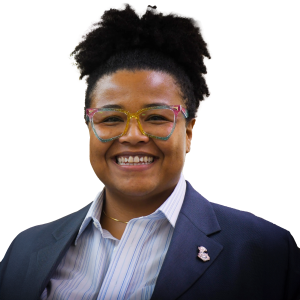
Jenn Gregory
President, Downtown Strategies
Jenn Gregory is the President of Downtown Strategies at Retail Strategies, a community development consulting firm. With over 15 years of experience in community development and downtown revitalization, Jenn joined Retail Strategies in 2019.