For many community leaders, retail recruitment can feel like a mystery.
Residents ask why a favorite restaurant isn’t in town. City councils want to see new retail development. Developers are looking for tenants. Yet many communities aren’t sure what actually happens behind the scenes to attract new retailers.
The reality is that successful retail recruitment is a structured process that combines data, real estate expertise, industry relationships, and persistent outreach.
At Retail Strategies, we partner with communities across the country to help them recruit retailers, restaurants, and businesses that fit their market. Acting as an extension of city staff, our team helps bridge the gap between community goals and retailer expectations.
Here’s a closer look at how the retail recruitment process works.
Every Community Starts with a Vision
Thriving communities don’t happen by accident.
Whether the goal is to increase sales tax revenue, create new amenities for residents, revitalize downtown districts, or support population growth, communities need a clear strategy for attracting the right businesses.
Retail recruitment starts by understanding a community’s goals, challenges, and opportunities.
Some communities are experiencing rapid population growth and need more restaurants and services. Others are focused on filling vacancies, strengthening downtown districts, or reducing retail leakage.
The first step is understanding what success looks like for the community.
Understanding the Market Through Data
Before approaching retailers, communities need a compelling story backed by facts.
Retailers make site selection decisions using data. They want to understand who lives in a market, how consumers spend their money, and whether a location fits their growth strategy.
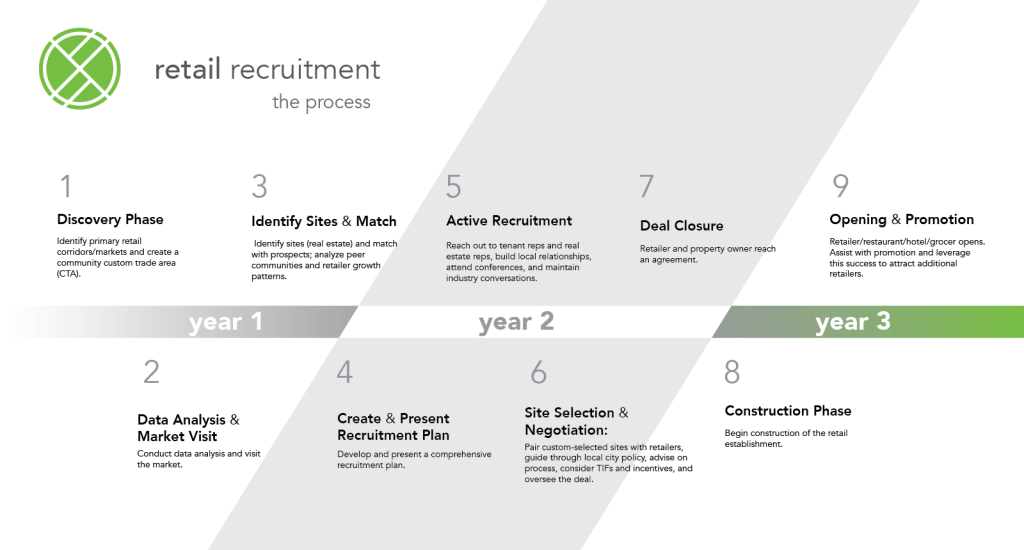
That’s why the discovery phase includes:
- Consumer spending analysis
- Retail leakage and demand studies
- Trade area identification
- Demographic analysis
- Psychographic data
- Mobile location intelligence
- Real estate inventory assessments
This analysis helps identify which retailers are most likely to succeed in the market and provides the information retailers need during their evaluation process.
Rather than relying on assumptions, communities can present a data-backed business case for investment.
Boots on the Ground Matter
Data tells part of the story.
The other part comes from spending time in the community.
Retail Strategies conducts market visits to evaluate retail corridors, development opportunities, traffic patterns, existing business clusters, and available sites.
These visits often uncover opportunities that don’t appear in reports or spreadsheets.
Local stakeholders, property owners, developers, brokers, and community leaders also provide valuable insight into the market’s strengths and challenges.
Combining data with local knowledge creates a more complete picture of the opportunity.
Building a Customized Retail Recruitment Plan
No two communities are alike.
After completing market analysis and site evaluations, Retail Strategies develops a customized retail recruitment plan tailored to the community’s goals and available opportunities.
The plan identifies:
- Priority retail categories
- Target retailers and restaurants
- Development opportunities
- Available sites
- Community strengths
- Potential challenges
- Recommended outreach strategies
The objective is simple: connect the right retailers to the right opportunities.
Connecting Communities with Retail Decision Makers
This is where many communities face their biggest challenge.
Finding the right contact within a retail organization can take months. Building credibility with site selectors and real estate directors can take years.
Retail recruitment is ultimately a relationship business.
Retail Strategies works directly with:
- Retail real estate directors
- Restaurant development teams
- Franchise groups
- Commercial brokers
- Developers
- Property owners
- Site selectors
Our team represents communities at industry conferences, conducts direct outreach, schedules meetings, and presents opportunities to retailers actively looking for new locations.
More importantly, we help communities tell their story in a way that resonates with retail decision-makers.
Often, success comes from presenting a market through a lens retailers haven’t previously considered.
Why Retail Recruitment Takes Time
One of the most important lessons for community leaders is understanding that retail recruitment is a long-term process.
A typical retail deal often takes between 18 and 36 months from initial conversations to store opening.
During that time, retailers may evaluate dozens of markets, conduct multiple rounds of site analysis, review demographic data, secure approvals, negotiate real estate agreements, and complete construction planning.
Successful communities stay engaged throughout the process.
Consistent communication, patience, and ongoing relationship-building are often what separate communities that win projects from those that don’t.
A Partnership Built on Shared Expertise
The most successful retail recruitment efforts happen when communities and recruitment professionals work together.
Community leaders bring local knowledge, relationships, and a vision for growth.
Retail Strategies brings retail expertise, market intelligence, industry relationships, and dedicated outreach.
Together, that combination helps communities compete for the retailers, restaurants, and amenities residents want.
Turning Vision Into Reality
Retail recruitment is about more than filling storefronts.
It’s about creating places where people want to live, work, shop, and invest.
By combining data, real estate expertise, and direct industry relationships, communities can position themselves for sustainable growth and attract businesses that strengthen both their economy and quality of life.
At Retail Strategies, we’re more than consultants. We’re partners in helping communities move from vision to reality.
Ready to Recruit the Right Retail?
Schedule a conversation with our team to learn how Retail Strategies can help your community attract new retailers, strengthen its tax base, and create lasting economic growth.
Get Checklist Access Now
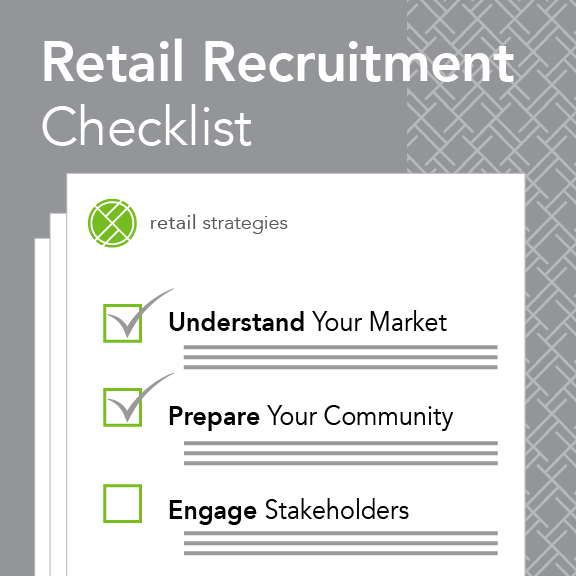
Download this checklist and start building a retail-ready future for your community.