Contents
Pop-up shops are a great addition to cities for several reasons. They make clever use of empty spaces in the community, turning forgotten corners into vibrant hubs. This not only beautifies the city but also boosts its economy.
Pop Up Shops
Reviving Vacant Spaces and Boosting City Economies
One significant benefit is that pop-up shops allow brands to dip their toes into new markets before diving in. Imagine a big brand wanting to open a store in a new neighborhood. Instead of committing right away, they can set up a pop-up shop. If it does well, they might decide to stay permanently. If not, they can try elsewhere. This approach saves money and minimizes risks.
Economic Impact of Pop-Up Shops
Pop-up shops also bring fresh excitement to a city. They introduce residents to new and emerging brands, enhancing their quality of life. People get to explore unique products and experiences they might not find elsewhere. Although exact stats may vary, studies show that pop-up shops often succeed. According to Pop Up Republic, pop-ups generate over $50 billion in annual sales in the United States. That’s a significant contribution to the economy.
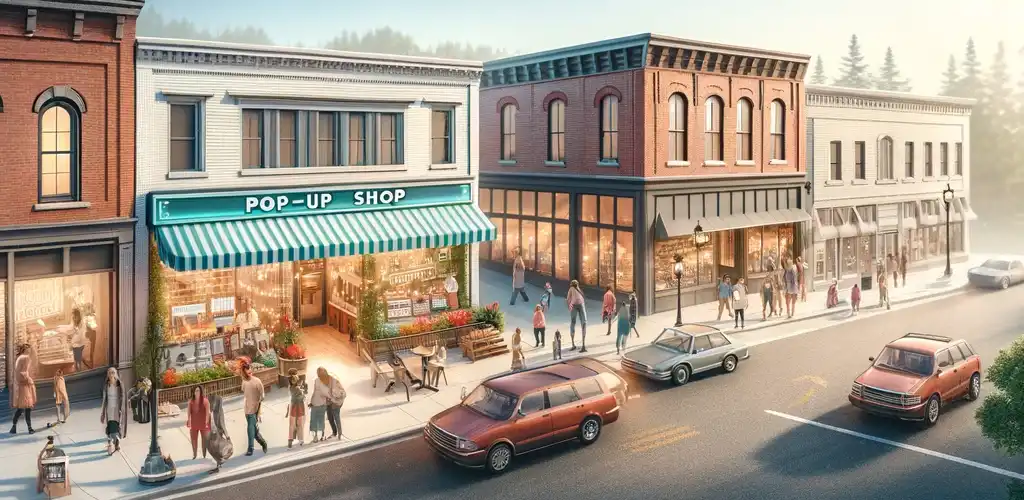
Warby Parker, a well-known eyewear brand, opened a pop-up shop in a vacant retail space in downtown Greenville, South Carolina in 2012. At the time, Greenville was undergoing a revitalization effort to transform its downtown area into a vibrant destination for shopping, dining, and entertainment. Despite Greenville’s relatively smaller population compared to larger metropolitan areas, the pop-up shop attracted significant attention and foot traffic, drawing in residents and visitors alike.
Pop Up Stats
$50 Billion
80% Success
Transforming Spaces and Communities
The success of the pop-up shop in Greenville demonstrated the demand for Warby Parker’s eyewear products in the area and paved the way for the brand to establish a permanent brick-and-mortar store in the city. In 2013, Warby Parker opened its first permanent retail location in downtown Greenville, signaling its commitment to serving customers in the region.
Opening and advertising a pop-up shop space can be a catalyst for economic prosperity in a city. These temporary ventures not only breathe life into vacant properties but also attract diverse businesses, fostering innovation and growth. It’s a dynamic way for both established and emerging brands to test the market and engage with the community, creating a win-win situation that fuels economic vitality.
Strategies for Success
Does your community incorporate pop-up shops into its economic development strategy?
They transform vacant spaces, help allow brands to test the waters, and offer residents a taste of something new. Contact our team to discuss the importance of retail, restaurants, and other economic growth opportunities.
Want to continue a conversation?
Reach out to Matt Jaeger.

More Articles by Retail Strategies
We maintain an active role as industry experts and thought leaders in the space of retail, real estate, demographics, and community development.
-
Where growth is headed: Economic development and retail expansion in small towns
Retail follows rooftops, and rooftops follow jobs. That order matters for every community working to attract new stores and restaurants, because the strongest retail recruitment story usually starts with an economic development win. When a manufacturer expands, a distribution center breaks ground or a new neighborhood gets approved, retailers notice. The past few months delivered…
-
Smaller boxes, smaller towns: Two retail trends rural and mid-sized communities can use now
Our team spends time in communities all over the country, working with the brokers, developers, and retailers who shape what gets built and where. Those conversations give us a clear view of where national brands are headed. Here’s what stands out right now, and what it means for retail recruitment in small towns. Trend one…
-
How Retail Recruitment Works: From Market Analysis to New Store Openings
For many community leaders, retail recruitment can feel like a mystery. Residents ask why a favorite restaurant isn’t in town. City councils want to see new retail development. Developers are looking for tenants. Yet many communities aren’t sure what actually happens behind the scenes to attract new retailers. The reality is that successful retail recruitment…
-
Retail for Every Season: How Destination Communities Can Build Year-Round Economic Vitality
Tourism Brings Visitors. Retail Creates Staying Power. For destination communities, success is often measured by peak season performance. Hotels fill up. Restaurants stay busy. Downtown sidewalks are crowded. Sales tax collections have risen. But what happens when the season ends? That question was the focus of Retail Strategies’ recent webinar, Retail for Every Season: Building Year-Round Vitality in…